How Singing Helps Children Learn and Grow
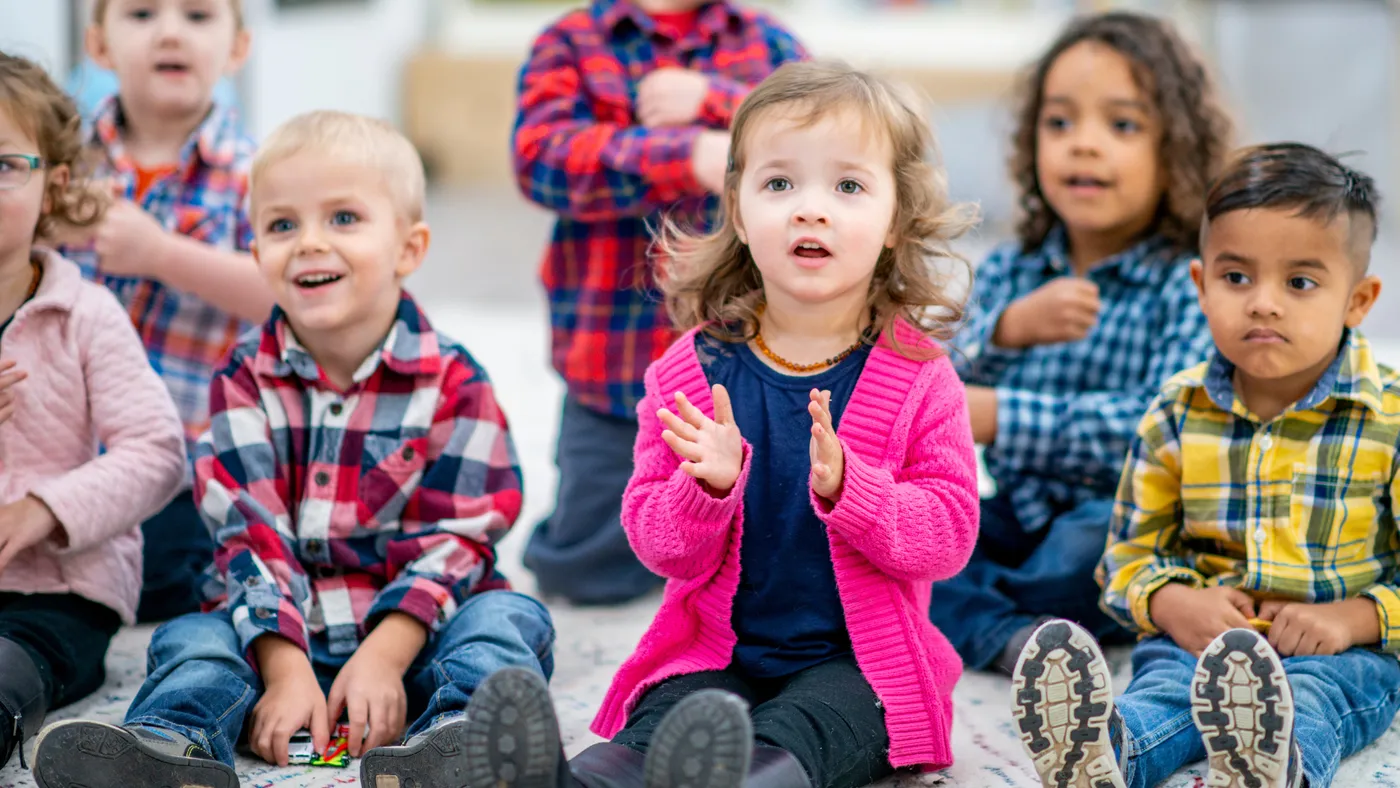
“If you’re happy and you know if, clap your hands!”
`Your kids are probably coming home from school every day, singing new, fun songs about everything under the sun. Almost all kids seem to love music, without being encouraged or taught. This innate love of rhythm and language, helps them to learn, and to connect socially. Using music at home can help enrich your lives and it’s a great tool for teaching your kids new skills!
Upbeat dance songs are great for getting the wiggles out! It’s also great to match body movement to the words in a song. This helps them to learn beats, and the natural rhythms of language. This understanding makes them better readers!
Nursery rhymes are also read slowly, to a beat, and because of this it’s easier to hear the way the words are made. It’s also easier to hear the small changes in sounds, like when the first letter changes in a rhyming word. Kids who practice nursery rhymes tend to have an easier time learning to talk.
Making up songs can help kids focus on tasks that are otherwise difficult. Anyone who’s been in an early childhood classroom, has probably heard the kids singing a song about picking up toys during clean up time. These songs are so helpful because they serve as a constant reminder of what the kids are supposed to be doing and it helps to keep them motivated. I still need music to keep me motivated while I’m cleaning!
Songs, especially songs for kids, are generally very repetitive. Your child’s favorite song is probably now the bane of your existence because you’ve heard about a million times already! As hard as the repetition is on us, it helps our kids learn and remember. You can teach about basically anything, from math to social skills, using music. I only recently forgot the words to the preamble after learning it in song form, over ten years ago!
If you don’t know a lot of preschool songs, you can just make something up! I like to pick a tune the kids already know, like “Twinkle Little Star,” and add new words to it. Here’s an example:
Buckle, buckle.
Buckle Up!
Can’t be safe until we do!
In the car, we must be safe
If we’re not, we have to wait!
Buckle, buckle.
Buckle up!
Let’s drive safe, both me and you!
It doesn’t have to be perfect, as long as you have fun with it! You can add hand movements and silly faces! Sing about what you need at the grocery store, or chores you have to do. Does your child have trouble with a math concept? Maybe you can sit down together and think of a song or rhyme to help them remember. They’ll have so much fun, they won’t even notice how hard their working!