
Dealing with Separation Anxiety in Toddlers
One of the most stressful days of my life occurred when my oldest daughter was almost 16 months old. It was one of those mornings when I was already running late. One of her older brothers couldn’t find his shoes, someone spilled milk on the kitchen floor, and my oldest son suddenly remembered that he needed me to sign a permission slip for the class field trip. In other words, it was a normal weekday morning.
I rushed the kids out to the car and then drove as fast as I dared to the babysitter’s house. The sitter would get the two older boys off to school, so I only had one stop to make before continuing to work. When we reached the sitter’s house, my two boys threw off their seatbelts and raced up the steps.
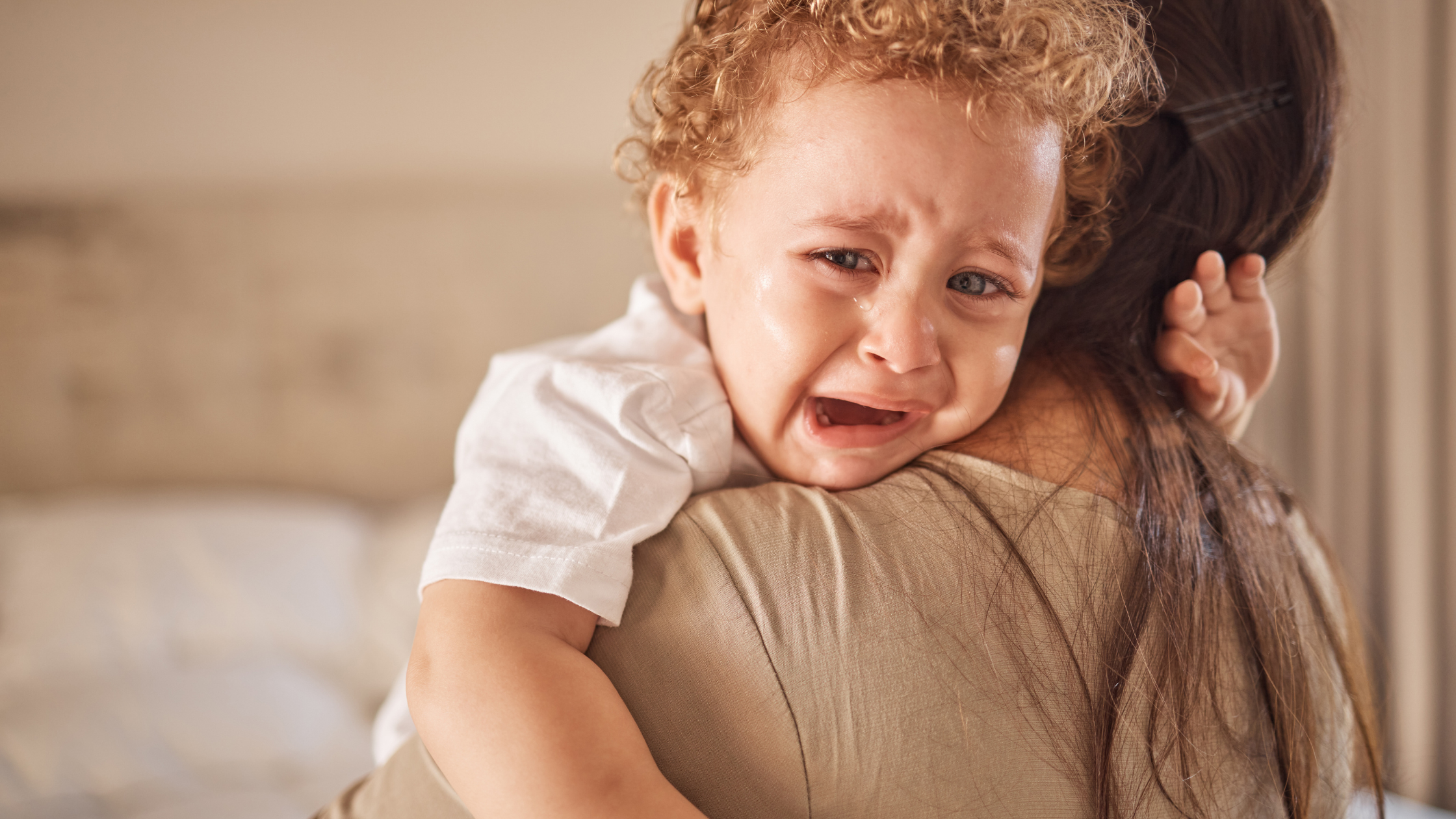
I quickly unbuckled my daughter from her car seat and followed them through the front door. The sitter smiled and reached out her arms for the baby, and that was when the meltdown occurred. My daughter’s face crumpled into a frown and her eyes filled with tears. Turning she wrapped her tiny arms around my neck and began sobbing.
“What’s the matter, May? It’s okay. Why are you sad?” I patted her back and kissed the top of her head.
My words had no effect. She continued to cry. When I tried to put her down, her little legs wrapped around me. Joyce, my sitter, tried to take May from me. In response, May grabbed my shirt in her tiny hands and hung on for dear life. To say I was shocked would be an understatement. This had never happened before.
I felt so torn. I didn’t know what to do. I didn’t know how to deal with this. I hadn’t worked when my older boys were toddlers, so this was new territory for me. If I didn’t hurry, I would be late for work. On the other hand, my daughter was sobbing uncontrollably. Tears were running down her cheeks. How could I leave her when she so clearly needed me?
Fortunately, Joyce was no stranger to separation anxiety. She knew exactly what to do. She peeled May out of my arms and said, “Tell Mommy good-bye. She’ll be back after naptime to pick you up.” May was still screaming and kicking and reaching her little hands out to me.
Joyce made eye contact with me and said, “She’ll be fine. This is normal.”
It was all I could do to keep from crying myself as I drove to work. I was terribly worried about May. Was she going to be okay? Was she sick? Was she still crying. As soon as I had a break that morning, the first thing I did was call Joyce to see how things were going. It was quiet in the background. Joyce assured me that everything was fine, and that May had calmed down a few minutes after I left.
This was my life for the next several months. May cried every time I left her, and not just at the babysitter’s either. She cried if I went to the grocery store. She cried when I tried to take her to her little Sunday school class at church. She even cried when I sat her on her own little chair for story hour at the library.
Gradually though, things got better. May adjusted. The tantrums grew shorter and less heartbreaking. Eventually, they disappeared altogether. By the time she was three, she was racing her brothers up the steps so that she could get the bean bag chair for cartoons. I didn’t experience any more tantrums when dropping off my kids at the sitters until her younger brother Jacob reached 15 months. And then the whole thing started all over again. And again. And again…with every single kid.
Here’s what I’ve learned about separation anxiety. It is a very normal thing. Most children experience it somewhere between eight months and two years. It usually starts to go away after the second birthday, but sometimes, it can hang around a little longer.
When my kids were sobbing with tears running down their faces, I felt like I was the most horrible mother in the world because I was leaving my kids behind when they clearly wanted me to stay. Imagine my surprise when I was taking a college class to learn that separation anxiety is not only normal, it’s healthy! Separation anxiety shows that the child feels safe and comfortable with his parent. I wasn’t a horrible mom after all!
About Separation Anxiety
Separation anxiety can come on suddenly like it did with May, or more gradually, depending on the child. Child psychologists believe that the reason children don’t have separation anxiety in the beginning is because they are still trying to make sense of the world. By the time the child reaches 8 months, she starts to realize that her parents are not mere extensions of herself, but that they are separate individuals who can come and go. The child worries that the parent might not be back.
Through personal experience, child development articles, parenting classes, and advice from good friends, I learned that there were lots of things I could do to help my kids with separation anxiety.
First of all, I learned that no matter how tempting it is to distract my child and then sneak away to avoid the tears, this is one of the worst things I could do. This actually creates more anxiety in the child because he doesn’t know when you are going to disappear. It creates a sense of mistrust with the child which is the last thing you want to do. When I thought about this logically, I realized that sneaking off was really a dirty trick to play on my baby. I wouldn’t like it if someone disappeared on me like that.
Instead of disappearing, I discovered that it was much healthier to have a good-bye routine for my child. When we were driving to the sitter’s house, I would talk to her and say things like, “You’ll have fun today at daycare. Maybe you can make me a pretty picture. I’ll be back to get you this afternoon.” When we got to the sitter’s house, I would carry her into the house and give her lots of kisses and a tight hug. I’d say, “Okay, sweetie, I love you. Have a good day. See ya later. I’ll be back after naptime.” This helped reassure her that I was coming back. Telling her that I’d be back after naptime also helped give her an idea of when I would return. She can’t tell time, but she knew the schedule, so it helped to say I’d return after a specific event.
Finally, I found that with some of my children, it helped to give them a favorite blanket or toy to take to the sitter’s house. It was a reminder of home and a comfort to them. This didn’t help with all of my children, but with some of them it did. It was just a matter of finding the right thing. With one of my boys, it was a different toy each day. Part of our routine at night before bed involved him picking out which toy he wanted to take to the babysitter’s the next day.
Looking back on those days, as horrible as it was, I have no regrets about leaving my children with a sitter. When it came time to go to school, to scout camp, and on overnight sport trips in high school, my kids were always confident. They were never homesick. I feel like part of that confidence came from going to the babysitter’s when they were younger. They learned that they could function on their own just fine, and they also learned that Mom would always be there when it was time to come home.
Here are some links to three articles about separation anxiety that you might find helpful:
http://www.parenting.com/article/separation-anxiety-age-by-age
https://medlineplus.gov/ency/article/001542.htm
https://www.psychologytoday.com/conditions/separation-anxiety
I would also highly recommend reading “The Kissing Hand” by Audrey Penn. It’s a great story about being separated. You might even want to kiss your child’s hand before leaving him at daycare, like the mother in the book does.